Saturday Shot of Finance: If VooDoo Were a Private Development, Would It Already Be Bankrupt?
Saturday Shot of Finance: If VooDoo were a private development, would it already be bankrupt? Staff Oct 11, 2025 4 min read
VooDoo Economics, The Telluride Edition
A local family of four recently posted on Facebook, "My family has lived here for ten years, so we are all too aware of the housing crisis... We are stuck in 'affordable housing,' and rent prices are soaring to unreasonable rates."
It's a sentiment that hits home—literally. And it's not just them. When "affordable housing" is neither affordable nor sustainable, you start to suspect that somewhere in Town Hall, the hired consultants did not provide the town with good information.
Our previous post, "Why Rent Is Too Damn High," broke down how Telluride's version of affordability often falls short due to the cost of new buildings that must be paid back and covered by rent. This led to an increased need for higher rents.
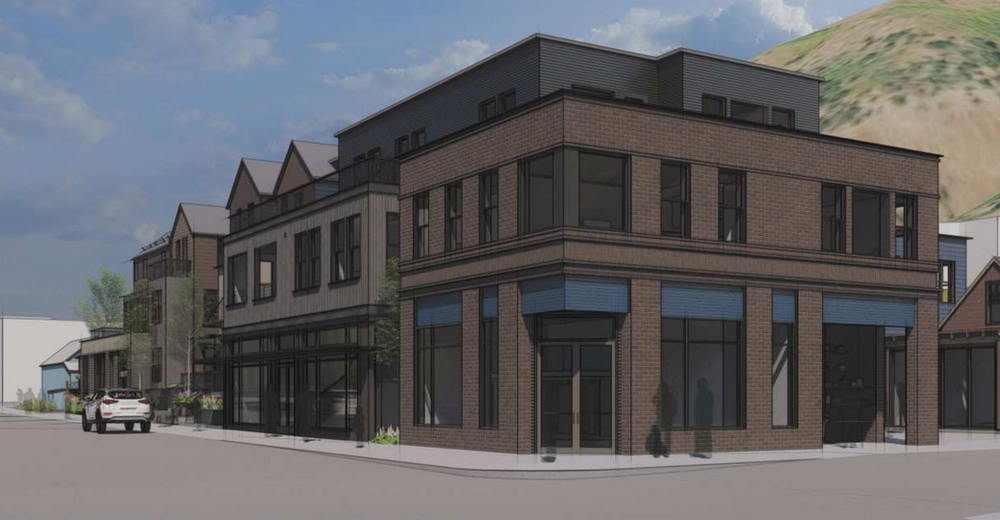
This time, let's put one project under the microscope: VooDoo, which was finished in 2024, a development that somehow manages to be both unaffordable to many renters and financially underwater at the same time.
VooDoo Math
Let's talk numbers. Back in 2023, the town accepted a fixed bid for the VooDoo project, totaling $27 million. That's for 27 residential units of varying sizes, plus the Coffee Cowboy commercial space, which works out to a million per unit on average, not counting the donated property.
The town borrowed $22 million at an interest rate of around 5.5% in 2022-23. That equals $1.2 million in interest-only payments per year, for a total of $12 million over the ten-year loan.
But here is where it gets sketchy. In 2032, the town owes a $23 million balloon payment. So, after 10 years and over $12 million in interest-only payments, the town will still owe $2 million more than it initially borrowed for a 10-year-old building.
To put it another way, the town is essentially paying rent on its own debt of approximately $200,000 per year in unpaid interest for the VooDoo project. This is without being able to set aside a dime for maintenance, repairs, or the occasional burst pipe that will inevitably appear at the worst possible time. This math also assumes full occupancy.
In short, this is debt that doesn't shrink. Instead, it multiplies. The plan appears to be a Hail Mary, with the town hoping that by 2032, interest rates will have fallen, the stars will align, and refinancing will save the day.
But here's the real magic trick: did anyone actually vote to approve this large-scale, ever-increasing debt, as required by Colorado's TABOR law or Telluride's Home Rule Charter? Of course not.
The TABOR Magic Trick
So, how does the town avoid putting such a massive debt to a vote? Well, there's a neat trick: if you classify the future debt only against the development itself, then no vote is required. Legal? Yes. Transparent? No.
Of course, state law does have one rule to this TABOR loophole that requires the project, like VooDoo, to pay for its own costs through its own income. This makes total sense because if the town is stating that no other funds, including town general funds, are needed to pay for the project, it is not the town's long-term debt. Otherwise, it requires a vote to approve. But you might reasonably ask what happens when a project is entirely underwater, such as owing $2 million more in 2032 than the town borrowed in 2022, and income not nearly matching expenses? Well, the town has two choices: (1) it can continue to pay the differences of income vs. debt expense, or (2) it can default and have the bond-holders take possession of VooDooo and sell it on the free market. The first choice appears to violate the spirit, if not the letter, of state law; the second would be pretty embarrassing to the town. Neither is a good financial choice.
Occupancy Problems
We know many people say VooDoo is too expensive, and currently, three of the 27 units are vacant (along with 13 units in Shandoka, and four in Sunnyside). Also, there is the issue of people not staying in the VooDoo next year. So far, no one has signed up for next year. This could be a logistical issue on the town's end, or a lack of desire, or both.
Other Serious Debt Issues
Now, enter Measure 2B, otherwise known as the Town Council's "Slush Fund." Don't worry, the town will assure you that Measure 2B will not raise your taxes. This is true so far as that statement goes. What Measure 2B does is let Council, with nothing more than a town resolution, borrow up to $64 million without ever having to go to the voters for approval on how it is used. This equals $132 million when paid back with interest. The town currently holds about $78 million in total debt, so this is a significant increase.
With Measure 2B, the town would be free to funnel a significant portion of the funds to cover the annual overruns at VooDoo with a simple vote of the Council, and the town would present it as entirely normal to continue subsidizing the already-expensive housing. The town could use it for any new residential project, no matter how controversial it might be.
Why Measure 300 is Necessary
While the town likes to talk about transparency and public input, it does everything within its legal power to structure large projects like VooDoo in a manner that explicitly avoids a vote of the people. While legal, this should not happen on policy grounds. There is no reason that large projects like VooDoo cannot be placed before the voters in the same manner that any long-term debt (over one year) is already required to be approved by voters if the town's general fund secures the debt.